The new post-AI standard for hiring
Stori turns interviews from unstructured conversations into evidence-linked candidate intelligence. Built on a century of behavioral science and eight years of independent research, our patent-pending methodology replaces outdated competency-based interviews with a new framework of questions and traits.
Four meta-traits. Twelve facets. One unified language.
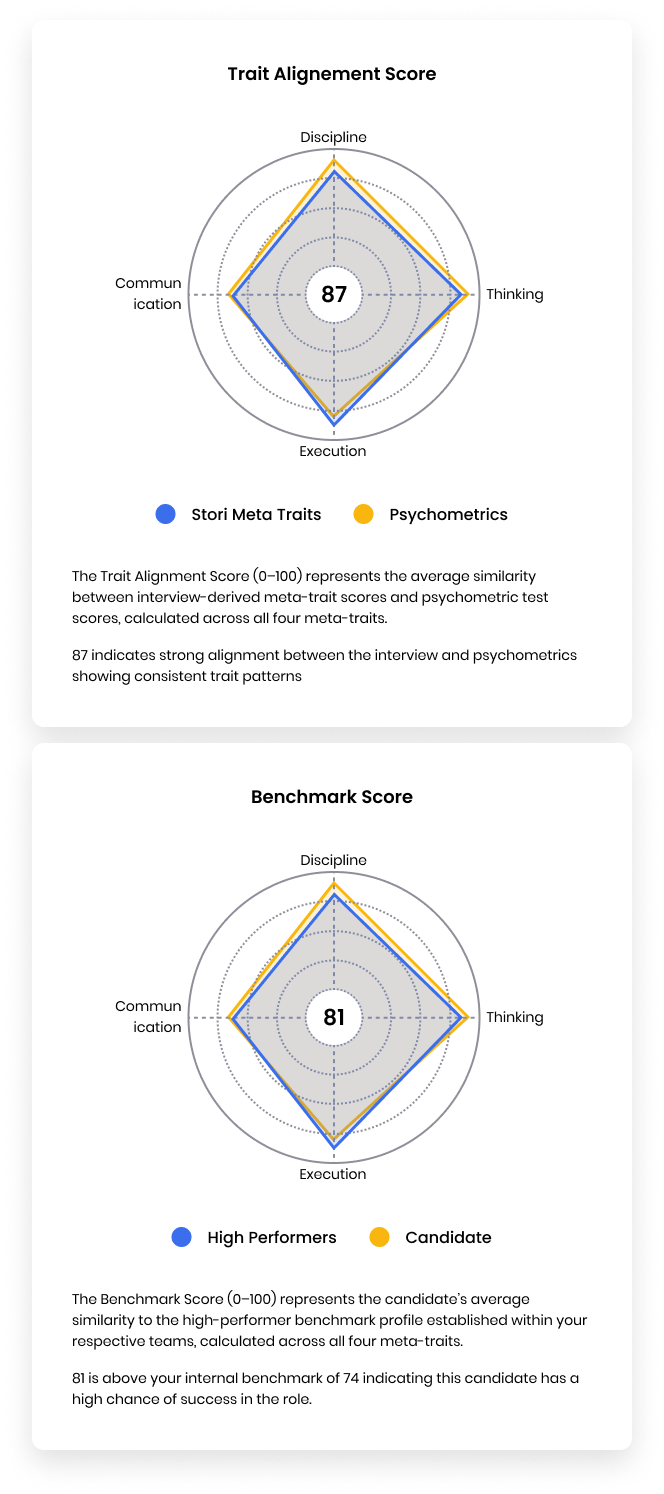
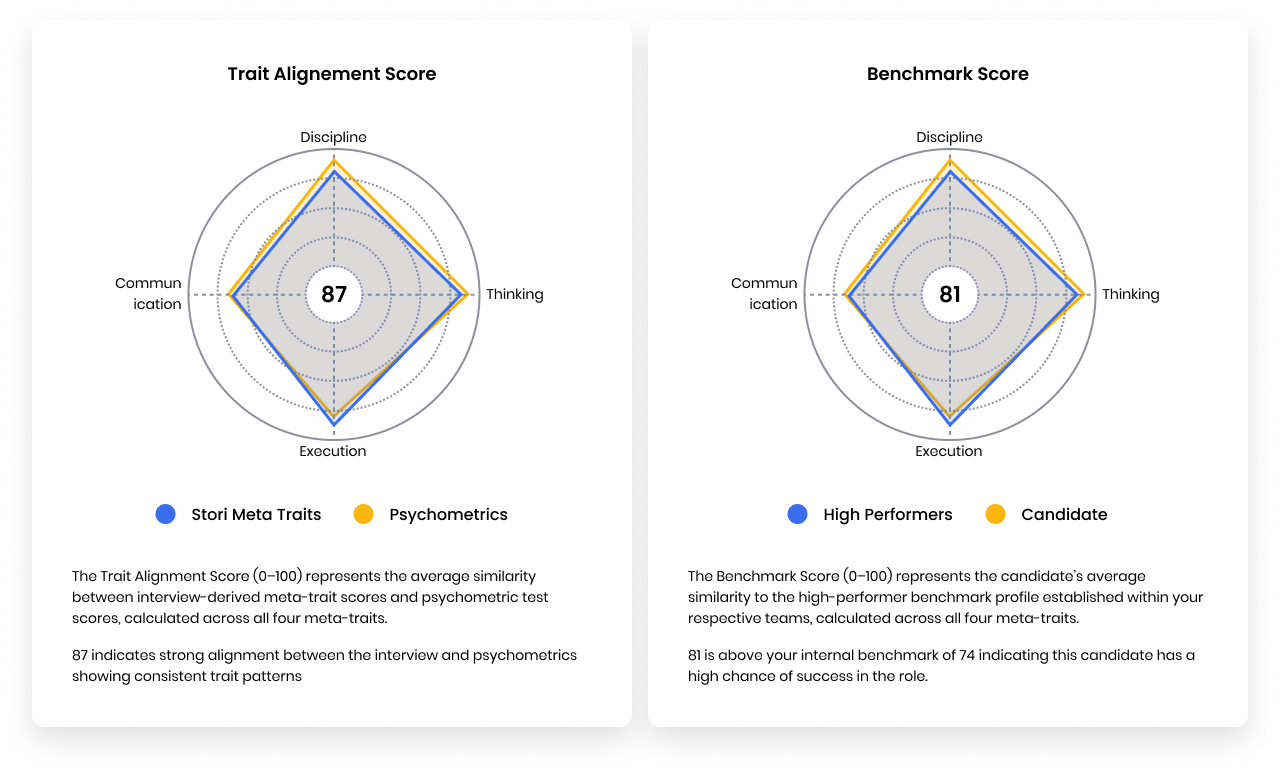
Every candidate is interpreted through a common language of four meta-traits and twelve facets, but Stori keeps the evidence sources separate: the 120-adjective trait assessment captures self-perception, while the interview captures evidence drawn from the candidate's narrative. The same facets appear in both, so the two can be compared without being collapsed.
Thinking
How a person explores ideas, processes information, and generates insight.
Discipline
How a person sets standards, maintains reliability, and sustains effort.
Execution
How a person acts under pressure, manages risk, and delivers outcomes.
Communication
How effectively a person conveys ideas, moves others to action, and navigates interpersonal dynamics.
How Stori Weighs Evidence
4,000-word transcripts carry far more context than 400-word AI resumes. Because interview evidence contains more context than resume keywords, Stori gives greater weight to demonstrated narrative evidence once it is available. This doesn't make the system perfect, it makes the reasoning more inspectable, because every assessment claim is tied back to specific transcript evidence.
Layer 0: Eligibility filters
Location, work authorization, required qualifications. Rule-based fit, not assessment.
Layer 1: Resume intelligence
Experience, skills, education, company history. A useful proxy, not direct evidence.
Layer 2: Interview intelligence
Narrative evidence from what the candidate says they did, decided, built, learned and changed. Richer context than resume data.
Layer 3: Cross-validation
Comparison between self-reported traits and interview-observed patterns. Agreement increases confidence; disagreement becomes a self-awareness signal where the evidence supports it.
Research-grounded trait assessment
Stori builds on established personality research and the IPIP lexical framework to develop an assessment based on behavioral traits, not just experience.